
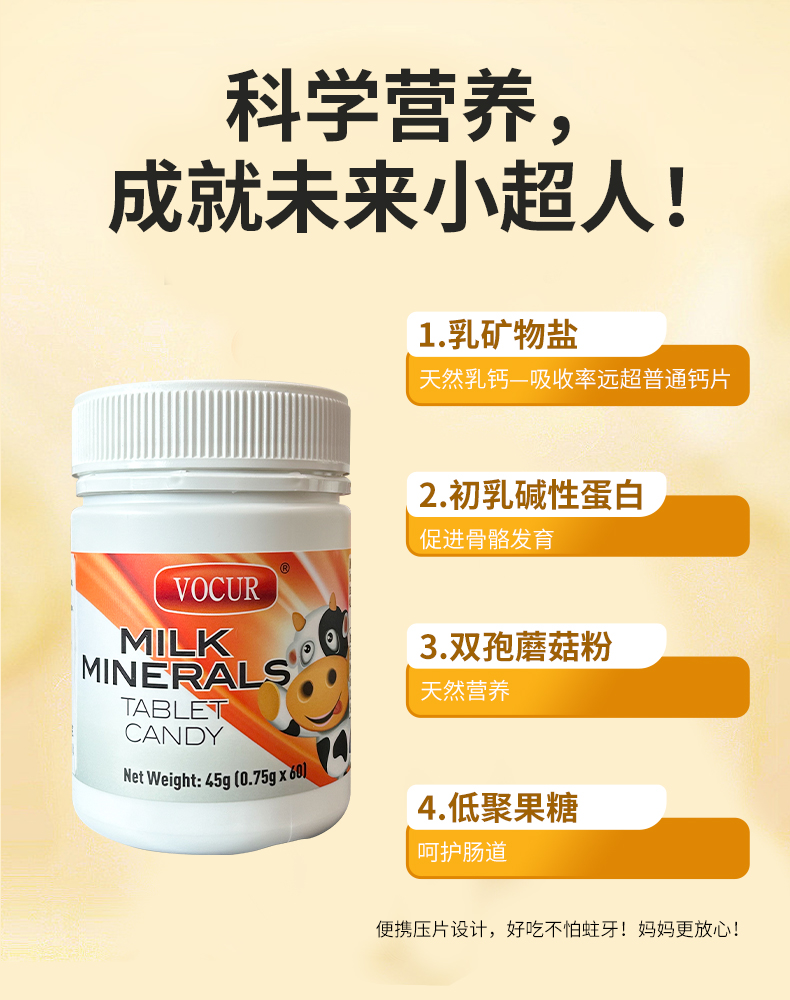
Product Details
| Category | Details |
|---|---|
| Ingredients | Sorbitol, Milk minerals, Skim milk powder, Fructooligosaccharide, Bisporal mushroom powder, Colostrum basic protein, Lemon powder, Microcrystalline cellulose |
| Allergens | This product contains dairy product. |
| Batch & Dates | BN: VM01250001; MFG: 2025/01/10; EXP: 2028/01/10 |
| Certifications | HACCP, GMP (and other logos) |
Nutritional Information
| Nutrient | Amount (per 100g) | % Nutrient Reference Value (NRV) |
|---|---|---|
| Energy | 1025 kJ | 12% |
| Protein | 4.0 g | 7% |
| Fat | 0 g | 0% |
| Carbohydrate | 56.3 g | 19% |
| Sodium | 100 mg | 5% |
I. Product Composition
Ingredients
Sorbitol, milk minerals, skim milk powder, fructooligosaccharides, bisporus mushroom powder, colostrum basic protein, lemon powder, and microcrystalline cellulose.
Allergen information: Contains dairy ingredients.
II. Source of Key Ingredients
Milk Minerals (Primary Calcium Source)
Derived from New Zealand whey, the milk mineral complex is produced through the removal of protein and lactose, followed by concentration and drying. The resulting natural milk-calcium blend contains calcium citrate, calcium phosphate, and other naturally occurring minerals, with a calcium-to-phosphorus ratio closely aligned with that of human bone structure.
Colostrum Basic Protein (CBP) — the “Gold Standard” of Colostrum
CBP is an active alkaline protein extracted from bovine colostrum and is recognized as one of the key bioactive proteins naturally present in early milk.
Bisporus Mushroom Powder
Produced from Agaricus bisporus (white button mushrooms), the powder contains naturally occurring ergosterol — a precursor to vitamin D — which can be converted into vitamin D2.
Fructooligosaccharides (Prebiotics)
Naturally found in Jerusalem artichokes and various fruits, fructooligosaccharides are soluble dietary fibers typically extracted from plant sources such as chicory and Jerusalem artichoke.
III. Core Benefits
Physiological Functions of the Milk-Calcium Formula
Supports Bone Density and Helps Prevent Osteoporosis
Milk minerals may help improve bone mineral density by stimulating osteoblast proliferation while inhibiting osteoclast activity. Studies suggest that bone-density improvements may continue even several years after supplementation has ceased — a distinction often noted in comparison with certain inorganic calcium sources. The formula may also help reduce fracture risk among postmenopausal women and older adults.
CBP Supports Balanced Bone Metabolism
Colostrum basic protein acts directly on osteoblasts, promoting cellular proliferation and accelerating bone-matrix mineralization. At the same time, it may inhibit osteoclast differentiation and activity, thereby reducing bone loss. CBP also supports calcium absorption and utilization, working synergistically with calcium to improve bone density and promote long-bone growth in children.
Natural Vitamin D Support from Mushroom Powder
The vitamin D precursors naturally present in bisporus mushroom powder may enhance calcium utilization, stimulate osteoblast activity, and suppress osteoclast function. These mechanisms contribute to improved bone mineral density (BMD) and may help lower fracture risk in postmenopausal women and elderly individuals.
[1] Kang, K., Sotunde, O. F., & Weiler, H. A. (2019). Effects of Milk and Milk-Product Consumption on Growth among Children and Adolescents Aged 6-18 Years: A Meta-Analysis of Randomized Controlled Trials. Advances in nutrition (Bethesda, Md.), 10(2), 250–261. https://doi.org/10.1093/advances/nmy081
[2] Kayomo, M. K., Mbula, V. N., Aloni, M., André, E., Rigouts, L., Boutachkourt, F., de Jong, B. C., Nkiere, N. M., & Dean, A. S. (2020). Targeted next-generation sequencing of sputum for diagnosis of drug-resistant TB: results of a national survey in Democratic Republic of the Congo. Scientific reports, 10(1), 10786. https://doi.org/10.1038/s41598-020-67479-4
IV. Directions for Use and Recommended Consumers
Directions for Use
Take one chewable tablet daily.
Safety Guidance
According to standards governing novel food ingredients, daily intake of milk minerals should not exceed 5 g, while colostrum basic protein (CBP) intake should remain below 100 mg per day.
Suitable Consumers
Suitable for individuals aged three and above who are capable of chewing and require calcium supplementation.