
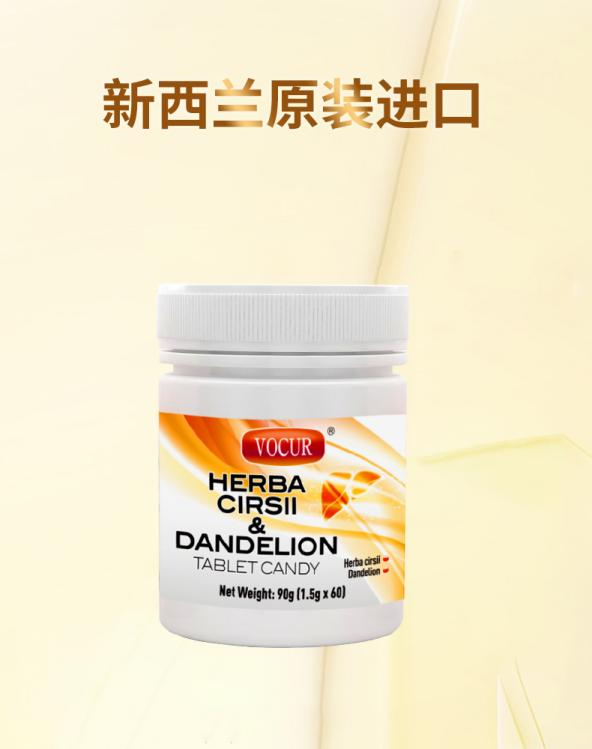
Product Details
| Category | Details |
|---|---|
| Ingredients | Sorbitol, Herba cirsii powder, Dandelion powder, Turmeric, Acerola cherry powder, Microcrystalline cellulose, Maltodextrin, Magnesium stearate |
| Batch & Dates | BN: VM02250101; MFG: 2025/02/28; EXP: 2028/02/28 |
| Certifications | HACCP, GMP (and other logos) |
Nutritional Information
| Nutrient | Amount (per 100g) | % Nutrient Reference Value (NRV) |
|---|---|---|
| Energy | 1297 kJ | 15% |
| Protein | 0 g | 0% |
| Fat | 0 g | 0% |
| Carbohydrate | 76.3 g | 25% |
| Sodium | 20 mg | 1% |
I. Product Composition
Ingredients
Sorbitol, Herba Cirsii powder, dandelion powder, turmeric, acerola cherry powder, microcrystalline cellulose, maltodextrin, and magnesium stearate.
II. Sources of the Primary Ingredients
Herba Cirsii Powder (Core Ingredient)
Derived from the Herba Cirsii plant, this ingredient is processed using supercritical carbon dioxide extraction technology in order to preserve flavonoids and other bioactive compounds to the greatest extent possible.
Dandelion Powder
Produced from the dried aerial parts and roots of the dandelion plant, the powder retains naturally occurring active compounds including phytosterols and flavonoids.
Turmeric (Containing Curcumin)
Processed from turmeric rhizomes, turmeric is rich in curcumin, a naturally occurring antioxidant compound widely studied for its biological activity.
Acerola Cherry Powder
Made from acerola cherries, this ingredient serves as a natural source of vitamin C.
III. Primary Benefits
Physiological Functions of the Herba Cirsii & Dandelion Formula
Herba Cirsii helps protect liver cells and reduce markers of liver injury
Studies suggest that Herba Cirsii may help inhibit liver cell necrosis and apoptosis induced by factors such as alcohol and carbon tetrachloride exposure. By helping stabilize hepatocyte membrane structures, it may contribute to reductions in serum alanine aminotransferase (ALT) and aspartate aminotransferase (AST) levels, thereby alleviating chemically induced liver injury.
Dandelion phytosterols may help counteract acute and chronic liver damage
Bioactive compounds in dandelion have demonstrated protective effects against liver injury associated with alcohol consumption, medication exposure, and environmental toxins. These compounds may help reduce pathological changes in liver cells and support the restoration of normal hepatic structure and physiological function.
Curcumin helps modulate chronic liver inflammation
Curcumin may help inhibit activation of the NF-κB signaling pathway, thereby reducing levels of inflammatory mediators including TNF-α, IL-1β, and IL-6 in liver tissue. In doing so, it may help improve low-grade chronic inflammatory conditions affecting the liver.
Acerola cherry supports hepatocyte repair and regeneration
Rich in vitamin C and antioxidant compounds, acerola cherry may provide nutritional support for tissue repair, improve hepatic microcirculation, and assist in the regeneration of damaged liver cells. It may also work synergistically to help inhibit abnormal collagen proliferation.
[1] Mahboubi M, Mahboubi M. Hepatoprotection by dandelion (Taraxacum officinale) and mechanisms. Asian Pac J Trop Biomed 2020; 10(1): 1-10. https://journals.muhn.edu.cn/apjtb/article/abstract/20200101
IV. Directions for Use and Suitable Consumers
Directions
Take two tablets daily. Chew thoroughly before swallowing.
Suitable Consumers
Suitable for adults seeking nutritional support for liver health.
Precautions
Not suitable for pregnant or breastfeeding women. Children should consume the product only under adult supervision. Excessive intake is not recommended, and prolonged overconsumption of concentrated botanical ingredients should be avoided. Store in a cool, dry place away from direct sunlight. Reseal tightly after opening to protect against moisture.